Parachinar-Peshawar Shia Convoy Attack: 43 Killed in Kurram Ambush
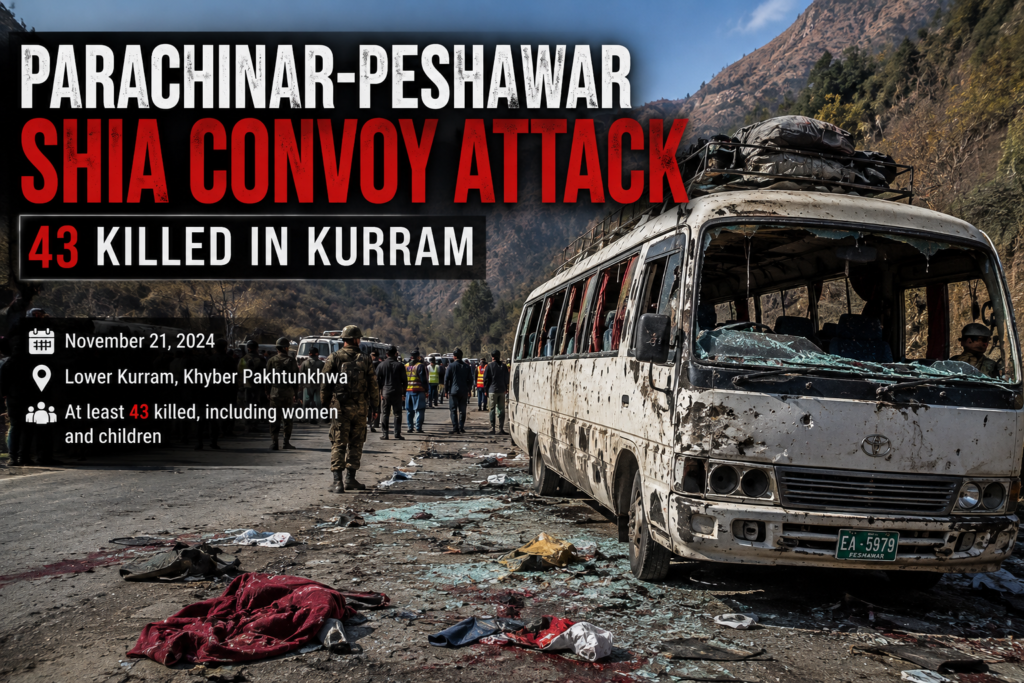
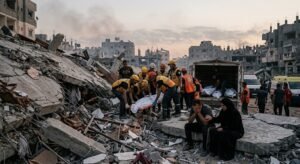
A damaged vehicle following the deadly Parachinar-Peshawar convoy attack in Kurram, Khyber Pakhtunkhwa, on November 21, 2024

By Qundeel Hassan
Senior Journalist & Human Rights Activist
The Parachinar-Peshawar Shia convoy attack on November 21, 2024, killed at least 43 people in Kurram district, including women and children, after gunmen opened fire on passenger vehicles traveling between Parachinar and Peshawar.
The deadly attack in Khyber Pakhtunkhwa’s Kurram district shocked Pakistan and sparked protests, mourning and renewed concerns about the safety of civilians traveling through the region.
The convoy was carrying passengers between Parachinar and Peshawar when it came under heavy gunfire in the Lower Kurram area. Authorities said dozens of people were killed and others were wounded.
According to contemporary reporting by Dawn, the death toll reached 43, with seven women and three children among the victims. Sixteen people were also reported injured.
What Happened in the Parachinar-Peshawar Attack?
The attack took place on November 21, 2024, in the Mandori-Bagan area of Lower Kurram.
A large convoy of passenger vehicles was traveling along the road between Parachinar and Peshawar when armed attackers opened fire.
Dawn reported that the convoy consisted of around 200 vehicles. Survivors described intense gunfire and chaotic scenes as passengers tried to escape the attack.
The road is a vital connection for residents of Parachinar and surrounding areas, making the attack particularly devastating for families who rely on it for travel, medical treatment, education and business.
43 People Reported Killed
The death toll increased as authorities identified victims and some injured passengers succumbed to their wounds.
By November 23, authorities reported that 43 people had been killed. The victims included women and children, while 16 other people were reported injured.
The Associated Press reported that at least 42 people had initially been killed, including six women, with around 20 others injured.
The changing figures in the immediate aftermath reflected the difficulty of assessing casualties in a remote and heavily affected area.
Were the Victims Shia Muslims?
The convoy was carrying predominantly Shia passengers traveling between Parachinar and Peshawar.
The attack occurred in Kurram, a district with a long history of sectarian tensions involving Sunni and Shia communities. Reuters described the victims as Shi’ite Muslims and reported that the attack occurred amid continuing sectarian tensions in the region.
However, the broader background to the violence was complicated.
Local authorities and reporting also pointed to longstanding land and tribal disputes in Kurram. Therefore, it is important not to attribute the attack to a specific militant organization without reliable evidence.
No group immediately claimed responsibility for the November 21 attack.
Kurram’s Long History of Violence
Kurram has experienced repeated outbreaks of violence involving sectarian tensions, tribal rivalries and disputes over land.
The November 2024 violence did not emerge in isolation. Earlier clashes in the district had already created a tense security environment, while a longstanding land dispute had contributed to tensions between communities.
Dawn’s analysis noted that the roots of Kurram’s violence were more complicated than a simple Sunni-Shia divide, with land disputes and historical governance problems also playing an important role.
This complex background is important when examining the Parachinar-Peshawar attack and its aftermath.
Protests Erupt After the Attack
News of the killings triggered protests in Parachinar and other parts of Pakistan.
Businesses, schools and markets were closed in parts of Kurram as residents mourned the victims and demanded better security.
Protests were also reported in cities outside Kurram, including Karachi, where demonstrators condemned the killings and called for greater protection of civilians.
The attack also raised questions about the security arrangements used to protect passenger convoys traveling through the area.
Suspected Sunni Militants and ISIS Threats to Shia Community
The Parachinar-Peshawar convoy attack took place against a backdrop of longstanding sectarian violence in Kurram, where Shia and Sunni communities have faced repeated clashes.
The victims of the November 21, 2024 attack were predominantly Shia passengers traveling between Parachinar and Peshawar. Reuters reported that local officials suspected the involvement of Sunni Islamist militant groups, including Tehreek-e-Taliban Pakistan (TTP), which has a history of targeting Shia Muslims.
However, no militant organization immediately claimed responsibility for the convoy attack. The exact identity of the attackers remained under investigation.
The wider Kurram region has also faced threats from Islamic State (ISIS/ISIL) and other militant organizations operating in northwestern Pakistan and along the Afghanistan border. Al Jazeera reported that both the Pakistan Taliban and ISIL had a presence in the broader security environment around Kurram.
It is therefore important to distinguish between confirmed responsibility and suspected involvement. While the attack was clearly carried out against a convoy carrying predominantly Shia civilians, available contemporary reporting did not establish that ISIS was responsible.
The attack nevertheless demonstrated the continuing danger faced by Shia communities in areas where sectarian tensions, militant activity and tribal disputes overlap.
A Continuing Concern for Shia Communities
The attack renewed concerns about the security of Shia communities in Pakistan.
Pakistan has experienced numerous attacks against Shia Muslims over the years, including attacks on mosques, religious gatherings and members of the Hazara Shia community.
The 2022 Peshawar Mosque Bombing was another major example of deadly violence against Shia worshippers. Linking these stories internally can help readers understand the wider history of sectarian violence in Pakistan.
For additional background, readers can also explore Shia killings and sectarian violence in Pakistan on Muawanewuakla.
What Happened After the Attack?
The November 21 attack was followed by further clashes in Kurram.
According to Dawn, the wider violence eventually killed more than 130 people and created a severe humanitarian crisis, with roads blocked and thousands of residents affected.
The government and local tribal leaders subsequently worked toward ceasefires and negotiations aimed at restoring peace.
But for families who lost relatives in the convoy attack, the consequences were permanent.
Frequently Asked Questions
When did the Parachinar-Peshawar Shia convoy attack happen?
The attack took place on November 21, 2024, in Lower Kurram, Khyber Pakhtunkhwa.
How many people were killed in the Parachinar convoy attack?
Authorities reported that the death toll reached 43 people in the immediate aftermath, including women and children.
What happened after the attack?
The attack was followed by further clashes in Kurram, protests and disruptions to roads and essential services. A government-mediated ceasefire was subsequently reached between rival tribes.
Conclusion
The Parachinar-Peshawar Shia convoy attack was one of the deadliest attacks on civilians in Kurram in 2024. At least 43 people were reported killed in the initial attack, including women and children.
Beyond the immediate loss of life, the violence exposed the serious security and humanitarian challenges facing residents of Kurram.
The attack also highlighted the vulnerability of civilians traveling along the Parachinar-Peshawar route and renewed concerns about sectarian violence in Pakistan.
For the families who lost loved ones, the November 21 tragedy remains a painful reminder of the human cost of prolonged violence.
Report
The report was written by Qundeel Hassan, Senior Journalist and Human Rights Activist at Muawanewuakla. Read more of his reporting on his author page.