Gaza: Human Rights Concerns After Hundreds of Bodies Are Found in the Rubble
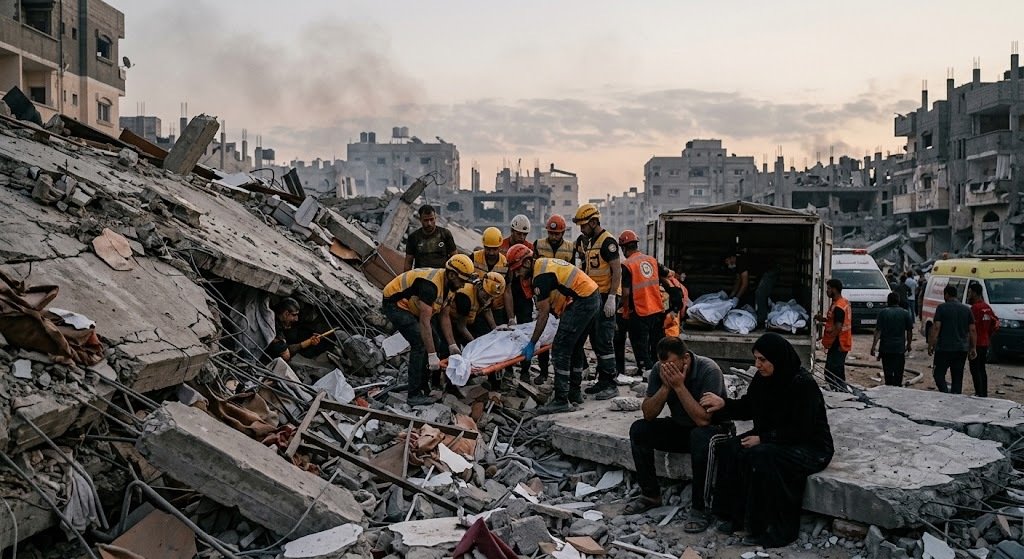
Humanitarian workers search through the rubble in Gaza as concerns grow over civilian deaths and human rights violations.

The discovery of hundreds of human remains beneath destroyed buildings in Gaza has renewed international concern over human rights, civilian protection and accountability during armed conflict.
On September 15, 2026, the UN High Commissioner for Human Rights said extensive human remains were being recovered from Gaza, including women and children. The United Nations has called for international investigators to have access to Gaza to help recover remains, preserve evidence and investigate possible violations of international law.
According to recent reporting, more than 630 bodies have been recovered from the rubble. Palestinian authorities estimate that thousands more people could still be buried beneath destroyed buildings.
The findings have once again placed the humanitarian consequences of the Gaza conflict at the center of international attention.
Bodies Recovered From Destroyed Buildings
For families in Gaza, the recovery of human remains is not simply a humanitarian operation. It is also a painful search for relatives who disappeared during years of conflict.
Many buildings were destroyed or severely damaged during the conflict that began after the Hamas-led attacks of October 2023. Rescue and recovery teams have faced enormous quantities of rubble, damaged infrastructure and limited equipment.
The rubble may contain both human remains and evidence that could be important for future investigations. Recovering bodies can therefore help families learn what happened to their relatives while also helping preserve evidence.
A Serious Human Rights Concern
The discovery of bodies beneath rubble raises fundamental questions about the protection of civilians during armed conflict.
International humanitarian law requires parties to an armed conflict to distinguish between civilians and military targets and to take precautions to reduce civilian harm. Civilian life and dignity remain protected even during war.
When large numbers of civilians die, disappear or remain unidentified, independent investigations become essential.
The circumstances surrounding each death must be established through credible evidence rather than assumptions.
Families Still Waiting for Answers
Behind every recovered body is a family seeking information.
Some families have spent years without knowing whether missing relatives survived, were killed or remain buried beneath destroyed buildings.
The identification of human remains can be extremely difficult when bodies have remained beneath rubble for long periods. The lack of forensic equipment, DNA resources and functioning infrastructure can make the process even more challenging.
For families, identification is important not only for mourning but also for legal, social and humanitarian reasons.
The Right to Dignity After Death
Human rights do not end when a person dies.
Human remains should be treated with dignity and respect. Families have a right to information about missing relatives, while the dead should be handled respectfully and, where possible, identified and returned to their families.
The recovery operation in Gaza is therefore about more than clearing destroyed buildings. It is also an effort to restore dignity to people who died and provide answers to those who are still waiting.
Why Independent Investigations Matter
Independent investigations can help answer important questions about the deaths and destruction in Gaza.
These questions include:
Who was killed?
Where and when did the deaths occur?
Were the victims civilians or combatants?
What caused the deaths?
Were reasonable precautions taken to protect civilians?
Were international humanitarian laws followed?
Can evidence be preserved for future legal proceedings?
These questions are particularly important when large numbers of civilian deaths are reported.
The UN has warned that removing rubble must not destroy evidence that could be relevant to investigations into alleged international crimes.
Gaza’s Wider Humanitarian Crisis
The recovery of bodies is taking place against a much broader humanitarian crisis.
Gaza continues to face severe humanitarian needs, including challenges involving shelter, healthcare, essential services, food, water and civilian protection.
Damage to homes, hospitals, roads, water systems and electricity infrastructure has made recovery and reconstruction extremely difficult.
The humanitarian crisis is therefore not limited to the immediate consequences of military attacks. The destruction of essential infrastructure continues to affect people’s ability to obtain healthcare, shelter, clean water and other basic necessities.
Protecting Evidence and Human Rights
As rubble is removed, authorities and humanitarian organizations face a difficult balance.
Removing debris is necessary to recover bodies, make roads usable and begin rebuilding communities. At the same time, rubble may contain evidence that could help establish what happened.
This makes proper documentation and forensic procedures extremely important.
International investigators, humanitarian organizations and local recovery teams need safe access, appropriate equipment and sufficient resources to carry out this work.
The Need for Accountability
The recovery of hundreds of bodies should reinforce the need for credible investigations into alleged violations of international humanitarian and human rights law.
Accountability should be based on evidence and should apply to violations committed by any party to the conflict.
Where credible evidence indicates that international crimes may have occurred, appropriate legal mechanisms should be allowed to investigate those allegations independently.
Accountability is important not only for victims and their families but also for preventing future violations.
The Human Cost Behind the Numbers
Numbers can make a humanitarian crisis difficult to understand.
More than 630 recovered bodies may appear as a statistic, but each person had a family, a home, a history and a life.
Among the remains are women and children, according to the UN human rights chief.
For families waiting for missing relatives, the recovery of remains can bring both grief and closure.
For the international community, it should also be a reminder that civilian protection must remain a central principle during armed conflict.
Conclusion
The recovery of hundreds of bodies from beneath Gaza’s rubble has created renewed human rights concerns and demands for accountability.
The UN’s call for international access highlights the importance of recovering human remains, identifying victims, preserving evidence and investigating possible violations of international law.
Thousands of families may still be waiting for answers about missing relatives.
Their right to know what happened to their loved ones should not be forgotten.
The international community should support humanitarian recovery efforts, protect evidence, facilitate independent investigations and ensure that civilians and their dignity remain protected under international law.
The tragedy beneath Gaza’s rubble is therefore not only about the destruction left behind by war. It is also about the fundamental human rights of the dead, the missing and the families still waiting for answers.