Gaza: Civilian Protection and Access to Humanitarian Aid
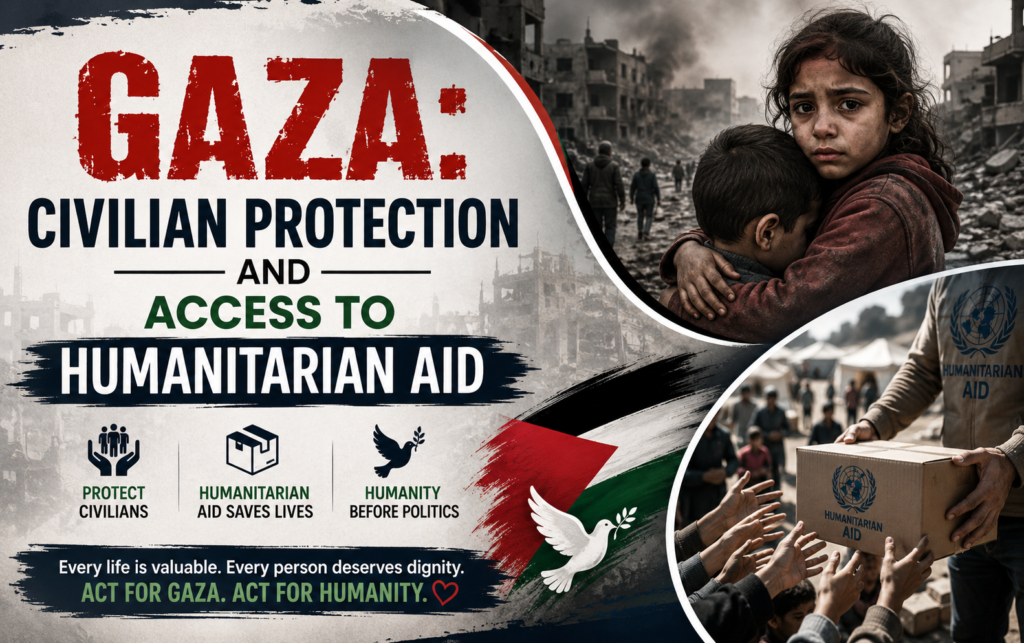
The humanitarian crisis in Gaza highlights the urgent need to protect civilians and ensure safe access to essential humanitarian aid.

Introduction
Human rights are the fundamental freedoms and protections that every person should enjoy, regardless of nationality, religion, ethnicity, gender, or political opinion. During armed conflict, protecting civilians and ensuring access to humanitarian assistance become especially important.
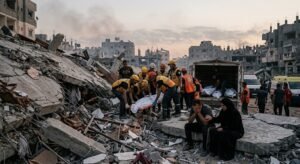
The situation in Gaza has remained a major humanitarian and human rights concern. In August 2026, the United Nations Office for the Coordination of Humanitarian Affairs (OCHA) reported that intense military activity, displacement, damage to civilian infrastructure and restrictions on humanitarian operations continued to create severe risks for civilians.
The crisis raises two central human rights questions: How can civilians be protected during conflict, and how can people receive the food, water, medicine and shelter they need to survive?
Civilian Protection
Civilians are protected under international humanitarian law. They must not be deliberately targeted, and parties to a conflict are required to distinguish between civilians and military objectives and to take precautions to reduce civilian harm.
In Gaza, however, civilians continue to face serious protection risks. OCHA’s July and August 2026 reports describe ongoing military activity, repeated displacement, insecurity and damage to civilian infrastructure, including health and education facilities.
For families who have already been displaced, repeated movement can be particularly dangerous. People may lose access to homes, schools, medical services, clean water and other essential facilities. Children, older people, persons with disabilities and other vulnerable groups can face especially serious consequences.
Access to Humanitarian Aid
Humanitarian aid is essential for people who cannot meet their basic needs because of conflict. Assistance can include food, drinking water, medicines, medical treatment, shelter materials, sanitation supplies and psychological support.
However, delivering aid in Gaza remains difficult. OCHA has reported restrictions on humanitarian movement, insecurity, shortages of supplies and funding gaps that make it harder for humanitarian organizations to reach people in need.
Humanitarian organizations also need safe and predictable access to affected communities. When aid convoys are delayed, denied, or prevented from reaching particular areas, civilians may be left without essential supplies.
Health and Medical Services
The protection of healthcare is another important human rights issue. Hospitals, medical workers and patients require protection during armed conflict.
OCHA reported in August 2026 that health infrastructure in Gaza continued to be affected by military activity and that humanitarian needs remained critical. Damage to healthcare facilities can have consequences far beyond the immediate incident because hospitals require electricity, clean water, medicines, medical equipment and trained personnel to function.
When medical services become unavailable, people with injuries, chronic illnesses, pregnancy-related complications and other health needs may struggle to receive treatment.
Food, Water and Human Dignity
Humanitarian assistance is not simply about providing supplies. It is also about protecting human dignity.
People affected by conflict should be able to obtain adequate food and safe drinking water. They also need sanitation facilities and shelter that provide basic protection from the environment and disease.
Recent UN reporting has highlighted continuing problems involving displacement, damaged water and sanitation infrastructure, overcrowded living conditions and inadequate shelter in Gaza.
These conditions demonstrate how conflict can affect many human rights simultaneously. A lack of safe water can become a health crisis; lack of shelter can increase protection risks; and food shortages can threaten the right to an adequate standard of living.
The Situation of Children
Children are among those most vulnerable during armed conflicts. They can lose family members, homes, education and access to healthcare. Displacement and prolonged insecurity can also cause lasting psychological harm.
Protecting children requires more than preventing direct attacks. It also means ensuring access to food, clean water, healthcare, education and safe shelter.
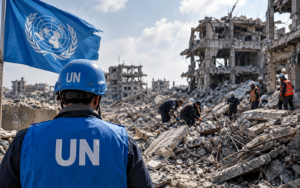
Humanitarian agencies working in Gaza continue to provide assistance to children and families despite significant operational challenges. The UN has repeatedly emphasized the need to protect civilians and maintain humanitarian access.
Humanitarian Workers and Aid Organizations
Humanitarian workers play a vital role in delivering assistance during crises. They need safe conditions to reach civilians and distribute essential supplies.
OCHA has reported that insecurity, access restrictions and operational difficulties continue to affect humanitarian activities in Gaza. Funding shortages have also limited the ability of humanitarian organizations to maintain and expand their response.
Protecting humanitarian personnel and allowing humanitarian organizations to operate safely are therefore essential parts of an effective humanitarian response.
International Responsibility
The protection of civilians in Gaza is not only a regional issue. It is an international human rights concern.
Governments, international organizations and humanitarian agencies have responsibilities under international law to work toward the protection of civilians and the delivery of humanitarian assistance. Parties to the conflict must respect applicable international humanitarian law, including rules concerning the protection of civilians and civilian objects.
The international community also has an important role in supporting humanitarian organizations financially and diplomatically so that essential assistance can reach people who need it.
What Needs to Be Done?
Several measures are important for improving the humanitarian and human rights situation in Gaza:
- Civilians must be protected from unlawful attacks and other violations.
- Humanitarian aid must be allowed to enter and move safely throughout Gaza.
- Medical facilities and healthcare workers must be protected.
- Food, clean water, sanitation and shelter must be made available to civilians.
- Children and other vulnerable people require special protection.
- Humanitarian organizations need safe and predictable access to affected communities.
- Alleged violations of international law should be investigated and accountability mechanisms should be strengthened.
- Adequate international funding is needed to maintain humanitarian operations.
Conclusion
The humanitarian crisis in Gaza demonstrates how quickly conflict can threaten fundamental human rights. Civilians need protection not only from violence but also from hunger, disease, displacement, lack of healthcare and the destruction of essential services.
Recent UN reporting shows that humanitarian needs in Gaza remain severe and that access constraints, insecurity and damage to civilian infrastructure continue to complicate relief efforts.
Protecting civilians and ensuring humanitarian access are therefore not optional acts of charity. They are central to human dignity and to the protection of human rights during armed conflict. The international community must continue working toward the protection of civilians, safe humanitarian access, accountability for violations and conditions that allow people in Gaza to live with dignity and security.
References
- United Nations Office for the Coordination of Humanitarian Affairs (OCHA), Humanitarian Situation Report, 7 August 2026.
- United Nations Office for the Coordination of Humanitarian Affairs (OCHA), Humanitarian Situation Report, 14 August 2026.
- United Nations Office for the Coordination of Humanitarian Affairs, Humanitarian Situation Report, 16 July 2026.
- United Nations Office for the Coordination of Humanitarian Affairs, Humanitarian Situation Report, 23 July 2026.
- United Nations, information and updates on the situation in the Occupied Palestinian Territory.