Russia Launches Major Missile and Drone Attack on Kyiv
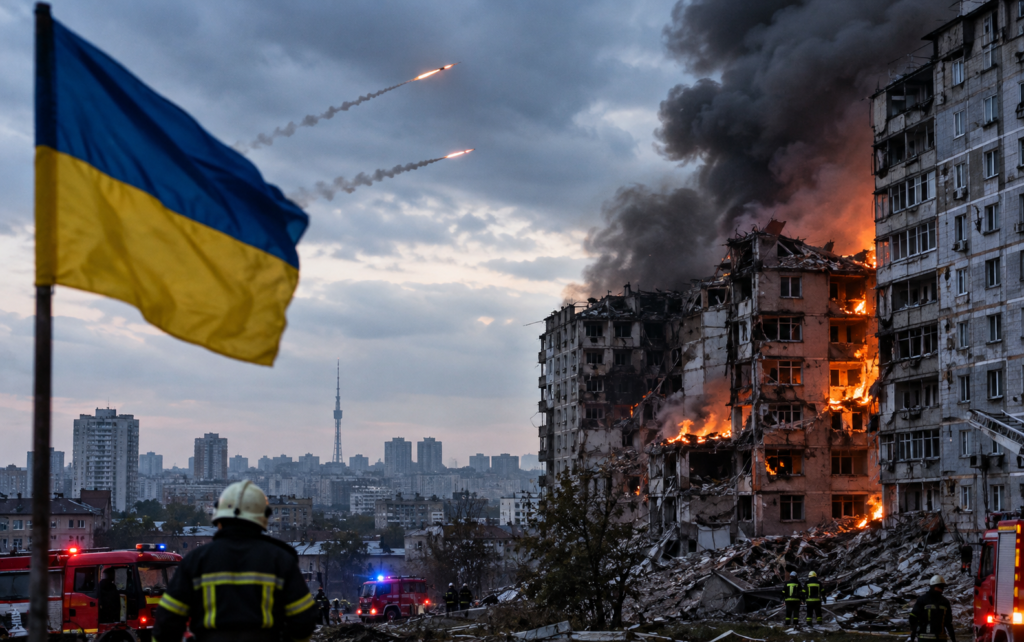
Russian missile and drone strikes cause damage in Kyiv.

Kyiv, Ukraine — September 8, 2026: Russia has launched a major missile and drone attack on Kyiv, killing at least five people and injuring nearly 30 others, according to Ukrainian officials and Reuters. The overnight assault caused fires and widespread damage across the Ukrainian capital, hitting residential and public infrastructure.
The attack marks a renewed escalation in Russia’s aerial campaign against Ukraine after a brief pause that coincided with the visit of U.S. peace negotiators to Kyiv and Moscow.
Major Missile and Drone Attack Hits Kyiv
The latest Russian attack involved a combination of drones and ballistic and cruise missiles. Ukrainian authorities reported that explosions were heard across Kyiv as air defenses attempted to intercept incoming weapons.
Several districts of the capital were affected. At least 14 high-rise buildings were damaged, along with a dormitory, school, clinic, warehouses and other facilities, according to officials cited by Reuters. Fires broke out at multiple locations as emergency crews responded to the strikes.
Ukrainian authorities said that two people were killed in a strike on a warehouse, bringing the reported death toll in Kyiv to five. Nearly 30 people were injured.
A Russian drone also partially damaged the building of a Ukrainian television channel, according to Ukrainian President Volodymyr Zelenskyy.
Ukraine Reports Large-Scale Air Attack
Ukraine’s air defenses intercepted a significant portion of the incoming weapons. The Financial Times reported that Ukraine’s Air Force said it had intercepted 145 of 166 drones, 31 of 32 cruise missiles and two ballistic missiles during the assault.
Despite the interceptions, the attack demonstrated the continuing pressure on Ukraine’s air-defense network.
Ukrainian officials have repeatedly warned that shortages of advanced interceptors could make it more difficult to protect cities and critical infrastructure from increasingly frequent Russian missile and drone attacks.
Residential Areas and Civilian Infrastructure Damaged
The damage reported in Kyiv highlights the continuing risks faced by civilians during Russia’s air campaign.
Residential buildings were among the structures damaged in the attack, while a school, medical clinic and other civilian facilities were also affected. Emergency workers were deployed to damaged areas to extinguish fires and assist residents.
The attacks come after a period of intensified Russian aerial strikes against Ukraine. Reuters reported that Russia used more than 2,800 jet-powered drones against Ukraine during August, reflecting the growing scale of drone warfare.
Attack Follows U.S. Diplomatic Efforts
The latest bombardment comes shortly after U.S. peace negotiators Steve Witkoff and Jared Kushner visited both Ukraine and Russia in an effort to advance negotiations aimed at ending the war.
Ukrainian President Volodymyr Zelenskyy said the discussions produced several ideas that could potentially contribute to future negotiations, although no major breakthrough was announced. A possible future meeting involving the leaders of Ukraine, Russia and the United States has also been discussed.
The resumption of large-scale attacks nevertheless demonstrates how fragile the diplomatic situation remains.
Ukraine Faces Growing Air-Defense Pressure
Air defense has become one of Ukraine’s most urgent military needs as Russia increases the number of drones and missiles used against Ukrainian cities.
Kyiv has been seeking additional air-defense systems and interceptors from its international partners. The United Kingdom announced on September 8 that it would provide £100 million to strengthen Ukraine’s air defenses ahead of winter.
Ukraine’s need for additional defensive systems is particularly significant because ballistic missiles can be difficult to intercept and can reach targets rapidly.
What the Kyiv Attack Means for the Ukraine War
The latest attack shows that long-range strikes remain a major component of the Russia-Ukraine war.
While diplomatic efforts continue, the battlefield and aerial campaign remain active. Russia continues to launch large numbers of drones and missiles against Ukrainian targets, while Ukraine has also expanded its long-range strikes against Russian military and energy infrastructure.
The continued attacks are likely to increase international pressure for stronger air-defense support and renewed diplomatic efforts to achieve a sustainable ceasefire.
International Response
The latest attack is expected to further intensify calls from Ukraine for additional military and humanitarian assistance.
European governments and Ukraine’s other allies have continued to discuss ways to strengthen Kyiv’s air-defense capabilities and protect critical infrastructure before winter.
The United Kingdom’s latest financial commitment is one example of the broader international effort to help Ukraine defend its cities against Russian aerial attacks.