Oil Prices Surge Above $100 as Middle East Shipping Attacks Increase
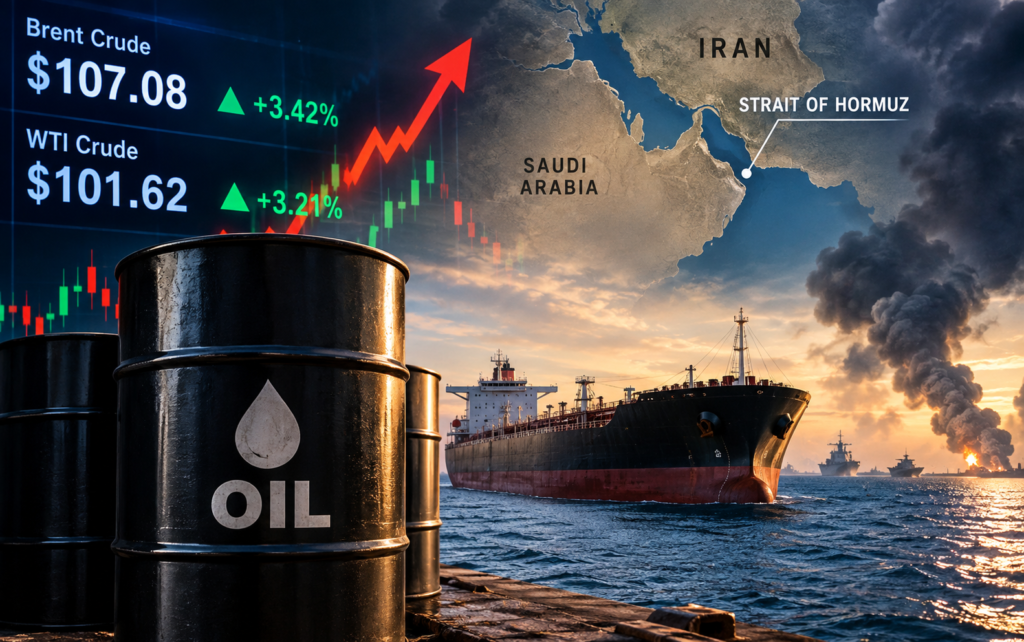
Oil prices surge above $100 as rising Middle East shipping tensions threaten global energy supplies.

Oil prices have surged above $100 a barrel as attacks on commercial shipping in the Middle East intensify, raising fears of further disruptions to global energy supplies.
Brent crude rose sharply on September 10, reaching around $107.08 per barrel, while U.S. West Texas Intermediate (WTI) crude climbed to approximately $101.62. Both benchmarks have gained more than 30% from their early-August lows.
The latest increase comes as shipping activity through the Strait of Hormuz falls to extremely low levels and tensions also increase around the Red Sea and the Bab el-Mandeb Strait.
Why are oil prices rising?
The latest oil price surge is being driven primarily by concerns about the security of major shipping routes.
The Strait of Hormuz is one of the world’s most important energy corridors. Any prolonged disruption can make it more difficult and expensive for oil producers to transport crude to international markets.
On Wednesday, preliminary vessel-tracking data showed only seven vessels transiting the Strait of Hormuz, compared with a 10-day average of 14. No liquefied natural gas tankers were recorded crossing during that period.
At the same time, tensions have increased around the Red Sea and Bab el-Mandeb, another important route for international trade.
Shipping attacks increase pressure on global energy markets
The latest escalation follows attacks and threats involving commercial vessels in the region.
Reuters reported that Iran said it had attacked 10 ships near the Strait of Hormuz following U.S. strikes, while the United States has also carried out attacks involving Iranian tankers. These developments have increased fears among traders that the conflict could further restrict oil exports.
The situation has also deteriorated in Yemen.
Iran-backed Houthi forces have taken control of the Yemeni port of Mokha, increasing concerns about the security of shipping through the nearby Bab el-Mandeb Strait. The waterway connects the Red Sea with the Gulf of Aden and is an important route for international trade and energy shipments.
What does the Strait of Hormuz mean for the world?
The Strait of Hormuz is strategically important because large volumes of oil and gas normally pass through the waterway.
When tanker traffic slows or shipping companies avoid the route, traders immediately begin pricing in the possibility of tighter supplies.
That does not necessarily mean the world will run out of oil. Instead, the market becomes concerned about whether enough crude can reach refineries at the right time.
Higher transportation costs, insurance premiums and longer shipping routes can also add to the final price of petroleum products.
Higher oil prices could increase inflation
The impact of oil prices above $100 could extend well beyond fuel stations.
Crude oil is an important input for transportation, manufacturing, agriculture and numerous consumer products. When energy costs rise, companies often face higher operating and transportation expenses.
Those costs can eventually be passed on to consumers through higher prices.
Airlines, trucking companies and shipping firms can be particularly exposed because fuel represents a significant part of their operating costs.
Higher energy prices can therefore contribute to broader inflation at a time when central banks are already watching price pressures closely.
Gasoline and diesel prices could rise
Consumers may also feel the impact through higher gasoline and diesel prices.
When crude oil becomes more expensive, refiners generally face higher input costs. The eventual effect on consumers depends on refining costs, taxes, exchange rates and local market conditions.
Countries that depend heavily on imported petroleum could face particularly difficult conditions if oil prices remain elevated for an extended period.
For developing economies, expensive fuel can also increase transportation and food costs.
Asia faces significant energy risks
Asian countries are among the world’s major oil importers, making developments in the Middle East especially important for the region.
Any prolonged disruption around the Strait of Hormuz could increase competition for available crude supplies and push up tanker and insurance costs.
China’s oil purchases are also being closely watched by market participants. Reuters reported that stronger Chinese crude buying could provide additional support to oil prices.
Can alternative routes reduce the impact?
Some producers have alternative export routes that can bypass the Strait of Hormuz.
Saudi Arabia, for example, can use infrastructure connecting its oil-producing regions with ports on the Red Sea.
Recent data showed that crude and condensate loadings from Saudi Arabia’s Yanbu port increased in early September, highlighting the importance of alternative routes during periods of heightened risk.
However, alternative routes cannot necessarily replace all the capacity normally available through Hormuz.
That means continued disruption could still create significant pressure on international oil markets.