Hazara Community in Pakistan: Shia Hazara Persecution, Sectarian Violence and the Fight for Human Rights
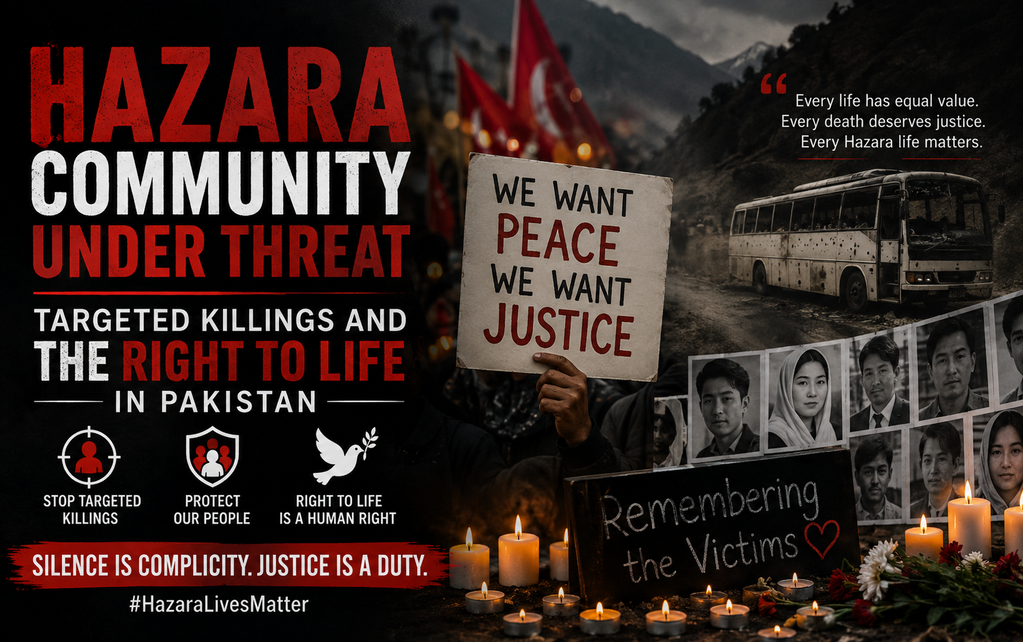
The Hazara community in Pakistan continues to face sectarian violence and human rights challenges, highlighting the need for equality, security and justice.

Qundeel Hassan
Senior Journalist & Human Rights Activist
The Hazara community in Pakistan, particularly Shia Hazaras in Balochistan, has faced years of targeted violence, sectarian attacks, discrimination and insecurity. In Quetta, where a large Hazara population lives, repeated attacks have affected the community’s safety, freedom of movement, education, employment and everyday life.
The persecution of Shia Hazaras in Pakistan is not simply a security issue. It is a human-rights concern involving the fundamental rights to life, equality, religious freedom, security and dignity.
Human Rights Watch reported that at least 509 members of the Hazara community were killed and 627 injured in militant attacks in Quetta over a five-year period, citing figures from Pakistan’s National Commission for Human Rights.
For the Hazara community, years of violence have created a lasting sense of insecurity and fear.
Who Are the Hazara Community in Pakistan?
The Hazaras are an ethnic community with a significant population in Pakistan, particularly in Balochistan and the city of Quetta.
A large proportion of Pakistani Hazaras are Shia Muslims. Their distinctive ethnic appearance and religious identity have made them particularly vulnerable to attacks by sectarian militant groups.
Human Rights Watch has documented attacks against Hazara civilians in Quetta, including people travelling to work, shopping in markets, attending religious gatherings and going about their daily lives.
The consequences of this violence have extended beyond individual attacks, affecting the community’s economic and social life.
Shia Hazara Persecution in Pakistan
Shia Hazara persecution in Pakistan has a long history.
Human Rights Watch has documented a pattern of targeted killings and bombings against the Hazara community in Balochistan, particularly in Quetta. Its major report, “We Are the Walking Dead”: Killings of Shia Hazara in Balochistan, Pakistan, examined the impact of sectarian violence on the community.
The organization reported that attacks affected virtually every part of Hazara life, including religious gatherings, markets, transportation, education and employment.
The violence has therefore had consequences far beyond the number of people killed or injured.
Targeted Attacks Against Hazaras in Quetta
Quetta has experienced some of the deadliest attacks against Pakistan’s Hazara community.
Human Rights Watch documented major attacks in 2013, including a January bombing at a snooker club frequented by Hazaras that killed 96 people and a February bombing in Hazara Town that killed at least 84 Hazaras and injured more than 160 people.
These attacks contributed to a climate of fear in which many Hazara residents restricted their movements and activities.
Human Rights Watch reported that some members of the community were effectively confined to Hazara-dominated neighborhoods such as Marriabad and Hazara Town, limiting access to education, employment and economic opportunities.
Amnesty International Calls for Protection of Hazaras
Amnesty International has repeatedly called on Pakistani authorities to better protect the Hazara community.
Following a 2019 bombing at an open-air marketplace in a Quetta neighborhood where many Shia Hazaras lived, Amnesty said the attack was a reminder of the continuing threats faced by the community. The organization called for effective measures to protect Hazaras from sectarian violence.
Amnesty had also previously called on Pakistani authorities to do more to protect the Hazara community following deadly attacks in Quetta.
These repeated calls demonstrate that protection of the Hazara community has remained an important human-rights issue for international organizations.
The 2021 Killing of 11 Hazara Coal Miners
One of the most painful recent examples of anti-Hazara violence occurred in January 2021, when 11 Shia Hazara coal miners were kidnapped and killed near Quetta.
The killings triggered protests by members of the Hazara community and renewed demands for greater security and accountability.
The incident demonstrated how vulnerable Hazara workers could remain even while carrying out ordinary economic activities.
The Right to Life of Pakistan’s Hazara Community
The right to life is one of the most fundamental human rights.
Every person should be able to live without being targeted because of their ethnicity or religious identity.
For the Hazara community, repeated attacks have created concerns not only about physical safety but also about the ability to participate freely in society.
When people fear travelling to work, attending school, visiting markets or participating in religious gatherings, violence affects fundamental freedoms as well as the right to life.
How Sectarian Violence Has Changed Everyday Life
The impact of anti-Hazara violence extends far beyond the immediate victims.
Families may lose parents, children or primary income earners. Survivors may experience long-term psychological trauma. Businesses can suffer when customers and workers are afraid to travel.
Human Rights Watch has documented how violence and insecurity have restricted Hazara freedom of movement and contributed to economic hardship and reduced access to education and employment.
A 2026 academic study examining the experiences of Shia Hazaras in Pakistan found that the community continues to face violence, discrimination and harassment, while also documenting the effects on daily life, exclusion, marginalization and trauma.
Hazara Community and Freedom of Movement
One of the less visible consequences of sectarian violence is the restriction of movement.
People who fear targeted attacks may avoid particular roads, markets or public areas.
Historically, Human Rights Watch documented how security concerns forced many Hazaras in Quetta to limit their activities to Hazara-dominated areas. This had economic and educational consequences for the community.
Freedom of movement is an important part of living a normal life. When an ethnic or religious community feels unable to safely move around its own city, the effects of violence become deeply rooted in everyday life.
Discrimination Against Hazaras in Pakistan
Violence is not the only challenge facing the Hazara community.
Hazaras have also reported discrimination and exclusion affecting different areas of life.
The 2026 academic research on Shia Hazaras found continuing concerns involving discrimination, harassment, exclusion and marginalization, even as the frequency of violent incidents has declined in recent years.
This demonstrates why protecting the Hazara community requires more than responding to terrorist attacks.
Long-term protection must also address discrimination and barriers to equal participation in society.
Pakistan’s Responsibility to Protect Minorities
The protection of religious and ethnic minorities is a fundamental responsibility of the state.
Pakistan’s authorities have a responsibility to protect citizens from violence, investigate attacks, prosecute those responsible and ensure that vulnerable communities can participate equally in public life.
For the Hazara community, effective protection should include:
- Thorough investigation of targeted attacks
- Prosecution of those responsible for sectarian violence
- Protection of Hazara neighborhoods and public spaces
- Security for religious gatherings
- Protection of schools and workplaces
- Action against incitement to violence
- Support for victims and their families
- Equal access to education and employment
- Stronger accountability for failures to protect civilians
Why the Hazara Issue Is a Human Rights Issue
The situation of the Hazara community in Pakistan should not be viewed solely through the lens of terrorism or national security.
It is also a question of human rights, equality and religious freedom.
When people are targeted because of their ethnic or religious identity, fundamental principles of equality and human dignity are threatened.
Every Hazara civilian has the same right to life and security as every other Pakistani citizen.
The Importance of Justice and Accountability
Justice is essential to breaking cycles of violence.
Families who lose loved ones need more than condolences. They need credible investigations, effective prosecutions and meaningful accountability.
Human Rights Watch has repeatedly raised concerns about failures to adequately protect Hazaras and hold perpetrators of sectarian violence accountable.
Without accountability, communities can lose confidence in institutions responsible for protecting them.
What Can Be Done to Protect Hazaras?
Protecting Pakistan’s Hazara community requires a long-term strategy.
Strengthen law enforcement
Authorities should investigate attacks thoroughly and ensure that perpetrators are prosecuted through fair judicial proceedings.
Protect vulnerable communities
Security should be strengthened around Hazara neighborhoods, schools, markets, workplaces and places of worship when credible threats exist.
Address extremist incitement
Authorities should take lawful action against organizations and individuals who promote violence against ethnic or religious communities.
Improve access to justice
Victims and families should be able to report crimes and pursue justice without intimidation or discrimination.
Promote equality
Long-term protection also requires improving equal access to education, employment, healthcare and public services.
Support survivors and families
Families affected by targeted violence may require financial, psychological and social support.
The Way Forward for Pakistan’s Hazara Community
The experience of the Hazara community demonstrates that security cannot be measured only by the absence of large-scale attacks.
True security means allowing people to live normal lives.
Hazaras should be able to travel to work, attend school, run businesses, worship, participate in public life and move around their communities without fear of being targeted because of their identity.
A sustainable solution therefore requires both security and equality.
Frequently Asked Questions About the Hazara Community in Pakistan
Who are the Hazaras in Pakistan?
The Hazaras are an ethnic community with a significant population in Balochistan, particularly Quetta. Many Pakistani Hazaras are Shia Muslims.
Why have Hazaras been targeted in Pakistan?
Human-rights organizations have documented attacks against Hazaras linked to their ethnic identity and Shia religious affiliation, particularly in Balochistan.
Where do most Hazaras live in Pakistan?
A significant Hazara population lives in Quetta, Balochistan, particularly in areas including Hazara Town and Marriabad.
Are Shia Hazaras still facing discrimination?
Recent academic research published in 2026 found that Shia Hazaras continue to experience threats, discrimination and harassment, although the frequency of violent incidents has decreased compared with earlier periods.
What happened to the 11 Hazara coal miners in 2021?
In January 2021, 11 Shia Hazara coal miners were kidnapped and killed near Quetta in an attack claimed by Islamic State militants.
What can Pakistan do to protect the Hazara community?
Authorities can strengthen protection for vulnerable communities, investigate attacks, prosecute perpetrators, combat incitement to violence and ensure equal access to education, employment and public services.
Conclusion
The Hazara community in Pakistan has endured years of targeted violence, sectarian attacks, discrimination and insecurity, particularly in Balochistan.
The history of attacks against Shia Hazaras demonstrates that the issue cannot be reduced to individual incidents. The consequences have affected life, security, freedom of movement, education, employment, economic opportunity and human dignity. Human Rights Watch and Amnesty International have repeatedly documented these concerns.
Although research published in 2026 indicates that the frequency of violent incidents has decreased, Shia Hazaras continue to face threats, discrimination and harassment.
Protecting the Hazara community is therefore not simply about preventing another attack. It is about ensuring that every Pakistani citizen—regardless of ethnicity or religious identity—can live with security, equality, dignity and freedom.
Pakistan’s commitment to human rights will ultimately be measured by how effectively its institutions protect communities that are most vulnerable to violence and discrimination.