Imran Ali Case: Enforced Disappearance, Alleged Torture and Extrajudicial Killing
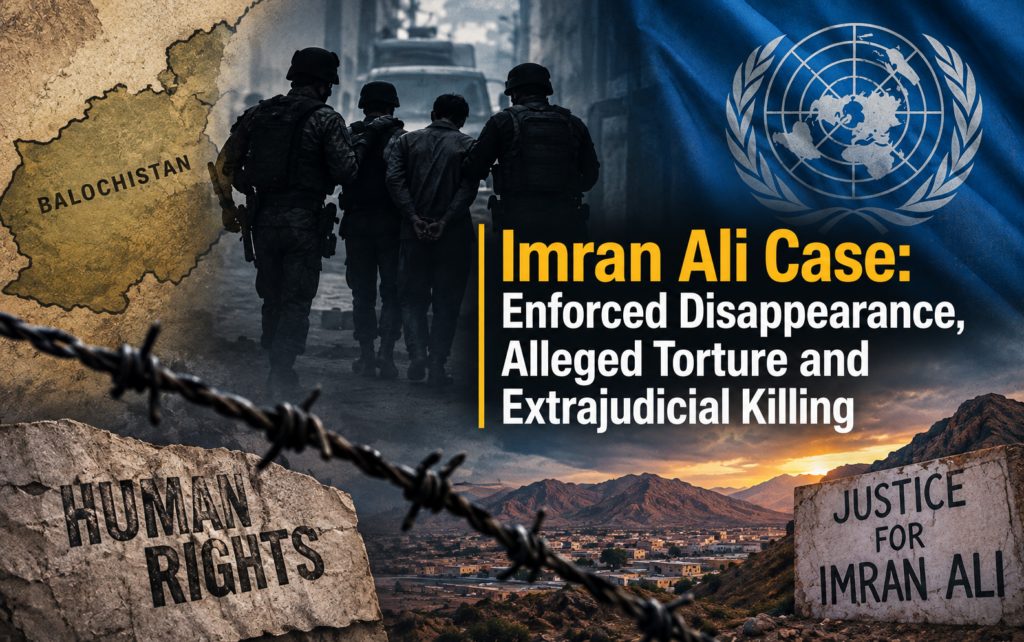
The Imran Ali case has raised serious human rights concerns over alleged enforced disappearance, torture and extrajudicial killing.

The case of Imran Ali, a Baloch student from Balochistan, has raised serious human rights concerns after United Nations experts expressed alarm over allegations of enforced disappearance, torture and extrajudicial killing.
According to the UN experts, Imran Ali was allegedly taken from his apartment in Quetta on August 27, 2025, by around 20 personnel from Pakistan’s Counter-Terrorism Department (CTD). His family reportedly received no official information about his whereabouts for almost a year.
The case came to wider international attention after a police officer reportedly told Pakistan’s Commission of Inquiry on Enforced Disappearances in August 2026 that Ali had been killed during an alleged encounter in May 2026.
The UN experts have called for a prompt, thorough, independent and impartial investigation into his disappearance, detention and death.
What Happened to Imran Ali?
The circumstances surrounding Imran Ali’s disappearance and death remain deeply contested.
The UN experts said Ali was allegedly abducted from his apartment on August 27, 2025, and taken to an undisclosed location. His family was reportedly not informed about his detention or whereabouts.
According to the UN statement, people who had reportedly been detained with Ali later confirmed that he had been held in custody. They also alleged that he was subjected to torture during detention.
For his family, the lack of information created nearly a year of uncertainty about whether Ali was alive, where he was being held and what had happened to him.
This is one of the central concerns in cases of alleged enforced disappearance: families can be left without official information about the fate or whereabouts of their loved ones.
UN Experts Raise Serious Human Rights Concerns
On September 4, 2026, UN human rights experts expressed grave concern over the allegations surrounding Imran Ali.
The experts said that when authorities deprive someone of liberty but refuse to acknowledge the detention or conceal the person’s fate or whereabouts, it can constitute an enforced disappearance under international human rights law.
They urged Pakistan to investigate the circumstances of Ali’s detention and death and to identify anyone responsible for wrongdoing.
The UN experts also emphasized the need for independent forensic examinations and proper identification of the remains.
The Alleged Killing and the Official Account
The case took another turn during a hearing before Pakistan’s Commission of Inquiry on Enforced Disappearances on August 6, 2026.
According to the UN statement, a police officer told the commission that Imran Ali had been killed during an alleged encounter in May 2026.
Authorities reportedly took approximately one month to identify his body. The UN said authorities subsequently claimed that the remains could not be preserved and that Ali was buried in June.
Ali’s family later visited the Civil Hospital in Quetta and reportedly identified his body from photographs held in hospital records.
However, questions remain about what happened to Ali between his alleged disappearance in August 2025 and the reported account of his death in May 2026.
Questions About Other Unidentified Bodies
The UN experts also raised concerns about the handling of other bodies.
According to their statement, Ali’s body was reportedly brought to the Civil Hospital in Quetta alongside six other bodies. The experts said the other bodies were not properly documented or reported by hospital staff or police and were buried without proper identification or notification to their families.
The UN experts warned that, given the broader pattern of enforced disappearance allegations in Balochistan, some of these unidentified bodies could potentially belong to other missing persons.
This makes proper identification, forensic investigation and preservation of evidence particularly important.
Why Enforced Disappearance Is a Human Rights Issue
Enforced disappearance is not simply a missing-person case.
When a person is allegedly taken into custody and authorities fail to acknowledge the detention or conceal the person’s fate, the individual can effectively be placed outside the protection of the law.
The consequences extend beyond the missing person.
Families may spend months or years searching for answers. They may not know whether their loved one is alive, where they are being held or what happened to them.
International human rights standards therefore place strong emphasis on accountability, transparency and effective investigations into alleged disappearances.
The Right to Life and Protection From Torture
The Imran Ali case also raises questions concerning two fundamental human rights: the right to life and the prohibition of torture.
Every person has the right to protection from unlawful deprivation of life. People held in custody must also be treated humanely and protected from torture and cruel, inhuman or degrading treatment.
If allegations of torture or unlawful killing are made against state officials, an investigation should be independent, impartial and capable of establishing what happened.
In Ali’s case, UN experts specifically called for an investigation capable of determining the cause, manner and circumstances of his death and identifying those responsible.
Balochistan and the Wider Human Rights Context
The Imran Ali case has emerged against a wider backdrop of concern about enforced disappearances and alleged extrajudicial killings in Balochistan.
The UN experts said they were concerned that Ali’s case could reflect a broader pattern involving alleged unlawful detention, torture, enforced disappearance and extrajudicial killing of Baloch people.
They also referred to concerns surrounding intensified security operations and allegations of collective punishment in the province.
Human rights organizations have also highlighted concerns about missing persons and alleged abuses in Balochistan. The Human Rights Council of Balochistan has separately called for the disclosure of Ali’s grave location, recovery of his remains and accountability.
The Family’s Demand for Answers
Ali’s family has continued to seek information about his death and the location of his remains.
According to a statement reported by The Balochistan Post, the family has demanded disclosure of the grave location, independent DNA testing and the return of his remains for a dignified burial. The family has also questioned the official account that Ali was killed during an armed encounter.
These demands underline a basic human rights principle: families have the right to know what happened to their relatives and to receive their remains with dignity.
What Should Happen Next?
The UN experts have called for several important steps.
1. An Independent Investigation
The circumstances of Ali’s disappearance, detention and death should be investigated by an independent and impartial body.
2. Independent Forensic Examination
A professional forensic examination can help establish the cause and manner of death and preserve evidence that may otherwise be lost.
3. Proper Identification of Remains
Authorities should ensure that human remains are accurately identified and that families are informed.
4. Return of the Remains
If Ali’s remains are located, they should be returned to his family for a dignified burial.
5. Accountability
If an investigation establishes that officials or other individuals committed unlawful acts, those responsible should face appropriate legal proceedings.
Why the Imran Ali Case Matters
The case of Imran Ali is important because it raises fundamental questions about enforced disappearance, detention, torture, the right to life and accountability.
For the family, the issue is deeply personal: they want to know what happened to their loved one.
For Pakistan’s justice system, the case represents a test of whether allegations involving state institutions can be investigated transparently.
For the international human rights community, it demonstrates why independent investigations and effective safeguards against enforced disappearance remain essential.
The UN experts have made their position clear: the allegations surrounding Imran Ali’s disappearance and death require a prompt, thorough, independent and impartial investigation.
Until the facts are independently established, claims surrounding the circumstances of Ali’s death should be treated as allegations rather than established findings.
Conclusion
The Imran Ali case highlights the devastating human consequences that alleged enforced disappearances can have on individuals and families.
His reported disappearance in August 2025, the allegations of torture during detention, the later disclosure of his reported death and the questions surrounding the handling of his remains have created serious concerns that require credible answers.
A transparent investigation is essential not only for Imran Ali’s family but also for public confidence in the rule of law.
Protecting human rights requires more than promises. It requires accountability, independent investigations and respect for the dignity and rights of every person, including those held in state custody.
The search for truth in the Imran Ali case should therefore remain focused on one fundamental question: What happened to Imran Ali, and who is responsible?