Iran Warns US Energy Assets in Gulf Are Vulnerable After Clashes
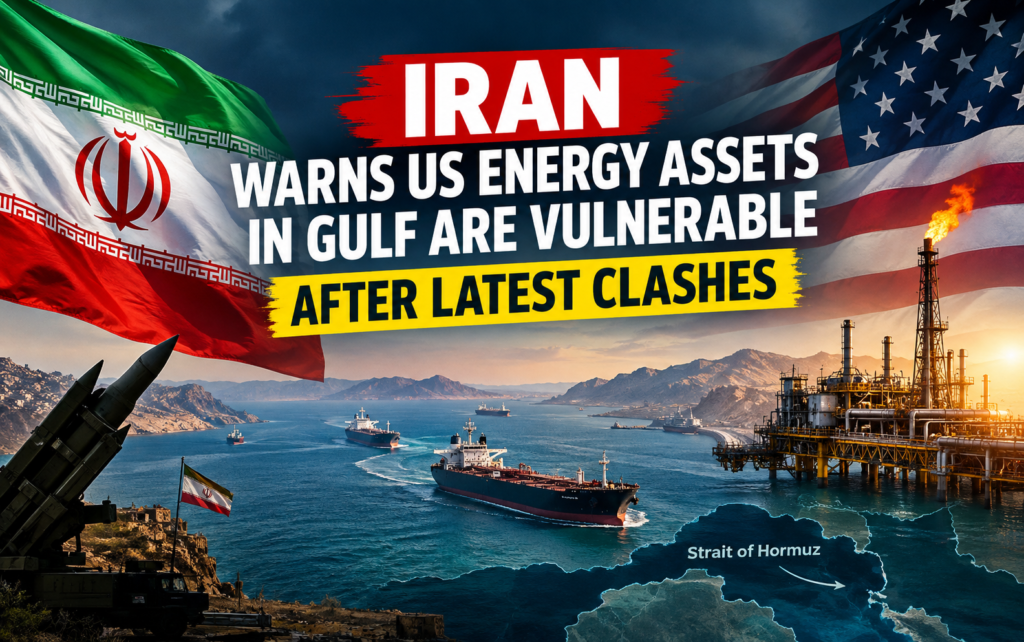
Iran warns that US energy assets in the Gulf could be vulnerable following the latest clashes.

Iran has warned that U.S. oil and gas companies and energy facilities in the Gulf could be targeted in retaliation if Washington carries out further attacks on Iranian energy infrastructure, raising fresh concerns about the security of global energy supplies.
The warning came after renewed clashes between the United States and Iran around the strategically important Strait of Hormuz, where attacks on shipping have added to concerns about oil and gas supplies.
Iranian Parliament Speaker Mohammad Baqer Qalibaf said on Monday that the region’s energy infrastructure was exposed and that American energy interests were similarly vulnerable. He warned that any attack on Iranian oil and gas assets could trigger retaliatory action against U.S. interests.
Iran Warns of Retaliation Against US Energy Interests
Qalibaf’s warning came as tensions between Washington and Tehran intensified following a series of recent military confrontations.
Iran has increasingly linked the security of Gulf energy infrastructure to the broader conflict with the United States. Tehran says attacks on Iranian energy assets would be met with responses against American interests in the region.
The latest warning adds another layer of risk to an already fragile energy market. Oil prices moved sharply higher as investors assessed the possibility that further clashes could disrupt shipping and energy production across the Gulf.
Iran’s position also comes amid U.S. warnings over Iranian attacks on American naval forces and shipping in the region.
Strait of Hormuz Remains at the Center of the Crisis
The Strait of Hormuz is one of the world’s most important energy chokepoints. The narrow waterway connects the Persian Gulf with the Gulf of Oman and the Arabian Sea.
According to the International Energy Agency (IEA), around 20 million barrels per day of crude oil and oil products passed through the Strait of Hormuz in 2025, representing roughly one-quarter of global seaborne oil trade. The agency also says the waterway carries a significant share of global liquefied natural gas shipments.
The U.S. Energy Information Administration (EIA) has similarly described Hormuz as one of the world’s most important oil chokepoints, noting that alternative routes can replace only part of the volumes normally transported through the strait.
That makes any prolonged disruption potentially significant for global oil markets.
Recent Clashes Increase Shipping Risks
The latest escalation has increasingly centered on commercial shipping and military vessels operating around the Strait of Hormuz.
Recent reports said the United States targeted Iranian oil tankers, while Iran attacked tankers and fired missiles toward U.S. warships operating near the strategic waterway. The confrontations have increased fears among shipping companies and energy traders about the risks of moving cargo through the region.
Two tankers carrying Saudi crude were also struck earlier in September while transiting the Strait of Hormuz, according to Reuters reporting based on shipping intelligence and tracking data.
The incidents have contributed to a sharp deterioration in the security environment for commercial vessels.
Iran Plans New Restricted Zone in the Gulf
Iran has also announced plans for a new restricted maritime zone in the Gulf.
Senior Iranian security official Mohsen Rezaei said the country would announce details of the proposed zone and approve maps for a new shipping corridor through the Strait of Hormuz.
The proposal could further complicate efforts to maintain commercial shipping through the waterway.
The Strait of Hormuz is already experiencing substantially reduced traffic compared with normal conditions. Al Jazeera reported that traffic continues to move through the strait but at significantly lower levels, while the IEA has warned that disruptions to the waterway have major consequences for global energy security.
Why the Gulf Energy Threat Matters
Any attack on major Gulf energy infrastructure could have consequences well beyond the Middle East.
The region is home to some of the world’s largest oil and gas producers, while the Strait of Hormuz provides a crucial route for exports from countries including Saudi Arabia, the United Arab Emirates, Kuwait, Qatar, Iraq, Bahrain and Iran.
The IEA says only limited pipeline capacity is available to bypass the Strait of Hormuz. Saudi Arabia and the UAE have alternative routes, but these cannot fully replace the volumes normally transported through the waterway.
This creates a major vulnerability for the international energy system.
Oil Prices Face Renewed Pressure
The latest military escalation has already affected oil markets.
Reuters reported that oil prices reached six-week highs on Monday as investors reacted to the latest U.S.-Iran clashes and the growing threat to energy infrastructure and shipping.
Higher oil prices can increase transportation and manufacturing costs and eventually put additional pressure on consumers through higher fuel prices.
The consequences could become more serious if attacks spread to major production facilities, export terminals or shipping routes.
The IEA has previously warned that disruptions around Hormuz can have global effects because of the huge volume of oil and gas passing through the waterway.
Gulf Countries Face Growing Security Concerns
The escalating confrontation also creates challenges for Gulf states that depend heavily on energy exports and regional stability.
Countries including Saudi Arabia, the United Arab Emirates and Qatar have major energy infrastructure located near the wider Gulf shipping network. Any expansion of the conflict could threaten production, exports and maritime transportation.
Gulf financial markets have already shown sensitivity to developments surrounding the U.S.-Iran confrontation. Reuters reported mixed trading across major Gulf stock markets on Monday as investors assessed renewed military and energy risks.