Women’s Rights in Afghanistan Under Taliban Rule: Education, Freedom and Human Rights Crisis
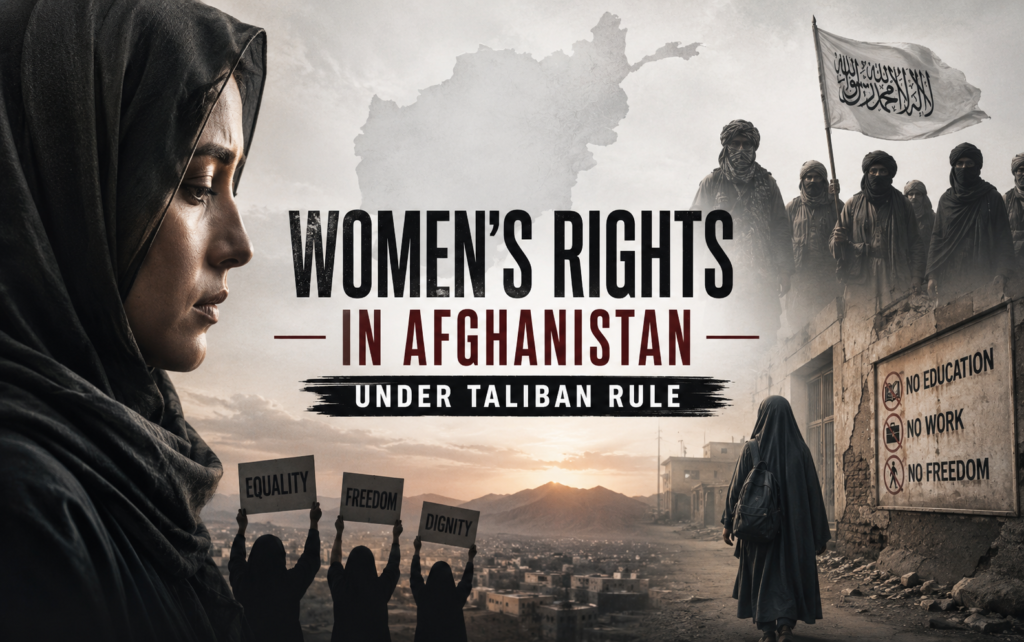
Women in Afghanistan continue to face severe restrictions on education, freedom and fundamental human rights under Taliban rule.

Women’s rights in Afghanistan have deteriorated significantly since the Taliban returned to power on 15 August 2021. Afghan women and girls have faced sweeping restrictions on education, employment, freedom of movement, healthcare, political participation and public life.
The restrictions have created what the United Nations has described as an exceptionally severe women’s-rights crisis, with consequences extending beyond women themselves to families, communities and Afghanistan’s future.
This article examines the human rights situation of women in Afghanistan, the restrictions imposed under Taliban rule, their impact on education and employment, and what the international community can do to support Afghan women and girls.
Women’s Rights in Afghanistan After the Taliban Takeover
The Taliban’s return to power in August 2021 fundamentally changed the lives of millions of Afghan women and girls.
Restrictions introduced and enforced by the Taliban authorities have progressively reduced women’s participation in education, employment, public life and decision-making.
For many Afghan women, these policies have meant losing opportunities that were previously available to them, while girls have faced severe barriers to continuing their education.
The issue is not simply about individual freedoms. The restrictions affect human rights, economic development, healthcare, education and the future of Afghan society.
Girls’ Education in Afghanistan
One of the most significant restrictions concerns girls’ education in Afghanistan.
Girls have been prevented from attending secondary schools, while women and girls have also been excluded from universities.
UN Women has reported that Afghan girls have remained barred from secondary education and that women and girls continue to face exclusion from higher education.
The consequences are enormous.
When girls cannot attend school, they lose the opportunity to develop the skills needed to become:
- Teachers
- Doctors
- Journalists
- Lawyers
- Scientists
- Engineers
- Business professionals
- Community leaders
The restriction also affects Afghanistan’s future workforce.
A country cannot develop its education system, healthcare sector or economy effectively while excluding a large portion of its population from education.
Why Education Is a Fundamental Human Right
Education is more than a pathway to employment.
It provides people with knowledge, independence and the ability to participate meaningfully in society.
For Afghan girls, being denied secondary and higher education can permanently affect their future opportunities.
The longer educational restrictions remain in place, the greater the risk that an entire generation of Afghan girls will experience long-term educational and economic disadvantages.
The issue has therefore become one of the most prominent women’s rights issues in Afghanistan.
Restrictions on Women’s Employment
Women’s employment has also been severely restricted under Taliban rule.
Women have faced restrictions on working in government institutions, NGOs and other sectors, while rules have also affected Afghan women working with international organizations.
UN Women has repeatedly highlighted the severe limitations placed on women’s participation in the workforce.
Employment provides more than financial income.
For women, having a job can provide:
- Financial independence
- Professional skills
- Personal dignity
- Economic security
- The ability to support family members
- Greater participation in society
Removing women from the workforce can therefore harm both women and the wider Afghan economy.
Women’s Freedom of Movement in Afghanistan
Freedom of movement is another major concern.
Afghan women have faced restrictions that can make it difficult to travel independently and participate freely in public life.
These limitations can have a direct impact on access to:
- Education
- Employment
- Healthcare
- Public services
- Family and community activities
Restrictions on movement can also make other rights more difficult to exercise.
For example, a woman who cannot travel independently may have difficulty reaching a hospital, workplace or educational institution.
Afghan Women and Access to Healthcare
The restrictions on women’s education and employment also have consequences for Afghanistan’s healthcare system.
Women and girls may require female healthcare professionals for cultural and practical reasons. When women are prevented from studying or working in healthcare, the number of female doctors, nurses and other healthcare workers can be affected.
This creates an important connection between women’s rights and the right to health in Afghanistan.
UN human-rights officials have raised concerns about the impact of restrictions on Afghan women’s access to healthcare and other essential services.
A functioning healthcare system needs trained professionals—and Afghanistan cannot afford to exclude women from contributing to that system.
Violence, Discrimination and Fear
Women’s rights also include protection from violence, discrimination and intimidation.
Afghan women have faced an increasingly restrictive environment in which their participation in public life has been significantly reduced.
In February 2026, the UN High Commissioner for Human Rights called for an end to the persecution of women and girls in Afghanistan.
The cumulative impact of restrictions can contribute to isolation and fear.
Women may be unable to make decisions about education, employment, travel or participation in public life without facing restrictions.
Afghan Women’s Political and Public Participation
Women have also been pushed out of political and public decision-making.
The exclusion of women from public institutions has consequences for the entire country.
Women represent approximately half of Afghanistan’s population. Their experiences and perspectives are therefore essential when governments and international organizations discuss Afghanistan’s future.
A society cannot fully represent its population when women are prevented from participating meaningfully in decisions affecting their lives.
How Taliban Restrictions Affect Afghan Society
The restrictions on women do not affect women alone.
They affect:
Families: Women who cannot work may lose an important source of household income.
Children: Mothers who are excluded from education and employment may have fewer opportunities to support their children’s development.
Healthcare: Restrictions on female medical professionals can make healthcare access more difficult.
Education: Excluding girls from schools reduces the country’s future pool of skilled workers.
Economy: Preventing women from working reduces economic participation and productivity.
Society: Removing women from public life weakens diversity and representation.
The World Bank has reported significant economic difficulties in Afghanistan since the Taliban takeover, while international organizations continue to highlight humanitarian challenges.
Women’s participation in the economy is therefore closely connected to Afghanistan’s long-term recovery.
Afghan Women Continue to Resist Restrictions
Despite the restrictions, Afghan women and girls continue to demonstrate resilience.
Many women continue seeking education through alternative means, supporting their families, working where possible and advocating for their fundamental rights.
Afghan women activists and civil-society organizations have also continued calling for education, employment, equality and participation.
Their resistance demonstrates that restrictions have not eliminated women’s aspirations.
Afghan women continue to demand the right to shape their own futures.
Why Afghan Women’s Rights Matter to the World
The situation in Afghanistan has become an international human-rights concern because the restrictions affect fundamental freedoms recognized under international human-rights principles.
The international community has repeatedly called for Afghan women and girls to have access to education, employment, healthcare and public participation.
The issue also has implications beyond Afghanistan.
If women are systematically excluded from education and employment, the consequences can affect:
- Economic development
- Poverty
- Healthcare
- Child welfare
- Humanitarian assistance
- Regional stability
- Future generations
Protecting women’s rights is therefore both a human-rights obligation and an important part of Afghanistan’s future development.
What Can the International Community Do?
The international community can take several steps to support women’s rights in Afghanistan.
1. Support girls’ education
Governments and international organizations should continue supporting safe educational opportunities for Afghan girls and women.
2. Support Afghan women-led organizations
Women-led Afghan organizations understand the challenges facing communities and should have meaningful access to international support.
3. Protect humanitarian access
Humanitarian assistance should reach women and girls without discrimination.
4. Support healthcare for women
International programs should ensure Afghan women can access essential medical services.
5. Document human-rights violations
Independent documentation can help preserve evidence of violations and support future accountability.
6. Include Afghan women in negotiations
Afghan women should have a meaningful role in international discussions about Afghanistan’s political and social future.
7. Maintain international pressure
Governments and international organizations should continue pressing for the restoration of fundamental rights for Afghan women and girls.
The Future of Women’s Rights in Afghanistan
The future remains uncertain.
Restoring women’s rights will require sustained international attention and meaningful changes to policies restricting education, employment, movement and public participation.
Afghan women should not be viewed only through the lens of victimhood.
They are students, teachers, doctors, journalists, business owners, mothers, professionals, activists and community leaders.
Their participation is essential to rebuilding Afghanistan.
Frequently Asked Questions
What is the current situation of women’s rights in Afghanistan?
Women and girls in Afghanistan face extensive restrictions on education, employment, freedom of movement, healthcare and participation in public life under Taliban rule.
Can girls attend school in Afghanistan?
Girls face severe restrictions on secondary education, and women and girls have also been excluded from university education.
Can women work in Afghanistan?
Women’s employment is heavily restricted, including in many government, NGO and international-organization roles.
Why are women’s rights in Afghanistan a human-rights issue?
Education, employment, freedom of movement, equality and participation in public life are fundamental rights. Restrictions affecting these areas have significant human-rights consequences.
How do restrictions on women affect Afghanistan?
The restrictions affect education, healthcare, household income, economic development and the country’s future workforce.
What can the international community do for Afghan women?
The international community can support education, healthcare, humanitarian programs and Afghan women-led organizations while continuing to document human-rights violations and advocate for women’s participation in decisions about Afghanistan’s future.
Conclusion
The women’s rights crisis in Afghanistan is one of the most significant human-rights challenges facing the international community.
Since the Taliban returned to power in 2021, Afghan women and girls have faced severe restrictions affecting education, employment, freedom of movement, healthcare and public participation.
These restrictions do not only limit individual freedoms. They affect families, communities, Afghanistan’s economy and the country’s future.
Afghan women should not be treated solely as victims. They are an essential part of Afghanistan’s society and future.
Their right to learn, work, travel, receive healthcare and participate in public life must be respected.
The struggle for women’s rights in Afghanistan is ultimately a struggle for equality, human dignity and the future of an entire country.