Human Trafficking: Modern Slavery, Human Rights Violations and the Fight for Freedom
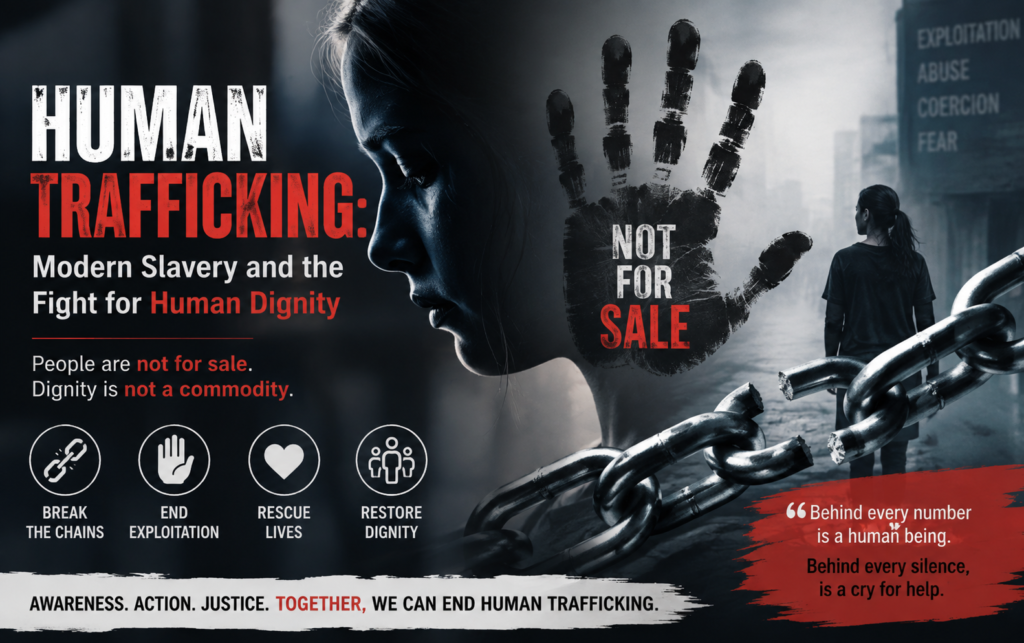
Human trafficking is a serious human rights violation that exploits people and threatens their freedom, dignity and safety.

Human trafficking is one of the most serious human rights violations in the world. It exploits vulnerable people for profit, deprives victims of their freedom, and can expose them to forced labor, sexual exploitation, domestic servitude, forced marriage, and other forms of abuse.
Although slavery is illegal around the world, modern forms of exploitation continue to affect millions of people. Understanding what human trafficking is, why people become vulnerable, how traffickers operate, and how victims can be protected is essential to the global fight for human dignity and freedom.
What Is Human Trafficking?
Human trafficking is the recruitment, transportation, transfer, harboring, or receipt of people through force, threats, coercion, deception, or abuse of vulnerability for the purpose of exploitation.
Human trafficking does not necessarily involve crossing an international border. A person can be trafficked within their own city, province, or country.
Traffickers may use promises of employment, education, migration, marriage, or financial opportunities to gain control over victims. Once a person is recruited, traffickers may use threats, violence, debt, deception, confiscation of documents, or other forms of coercion to maintain control.
This makes human trafficking both a criminal justice issue and a major human rights issue.
Human Trafficking and Modern Slavery
Human trafficking is often described as modern slavery because victims can be deprived of freedom and forced to provide labor or services for someone else’s benefit.
Modern slavery and human trafficking can take several forms, including:
- Forced labor
- Sexual exploitation
- Domestic servitude
- Forced marriage
- Child trafficking
- Forced criminal exploitation
- Exploitation of migrant workers
- Other forms of severe exploitation
The central problem is the exploitation and control of human beings.
A person who is threatened, deceived, or forced into exploitation is being denied fundamental freedoms and human dignity.
Why Is Human Trafficking a Human Rights Violation?
Human trafficking can violate multiple fundamental human rights.
These include:
- The right to life and personal security
- The right to freedom
- The right to be free from slavery and servitude
- The right to freedom from forced labor
- The right to freedom from torture and cruel, inhuman or degrading treatment
- The right to equality and non-discrimination
- The right to fair working conditions
- Children’s rights to protection from exploitation
The Universal Declaration of Human Rights recognizes that people should not be held in slavery or servitude and that everyone has rights to freedom and security.
Human trafficking therefore represents more than illegal employment or migration. It can strip victims of their freedom, safety, dignity and ability to make decisions about their own lives.
Who Is Most Vulnerable to Human Trafficking?
Human trafficking can affect people of all ages, genders, nationalities and backgrounds. However, certain circumstances can increase vulnerability.
Poverty and Unemployment
People facing poverty or unemployment may accept risky employment opportunities because they have limited alternatives.
Traffickers can exploit this vulnerability by offering jobs that appear legitimate but later involve coercion or exploitation.
Conflict and Displacement
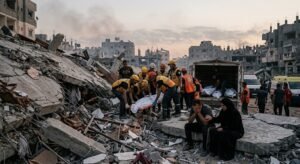
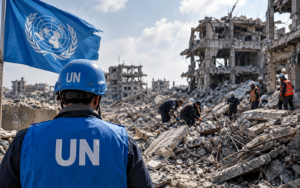
War, political instability and displacement can leave people without stable housing, income, documentation or legal protection.
Refugees and displaced people can therefore become particularly vulnerable to trafficking and exploitation.
Children
Children are especially vulnerable because they may depend on adults for protection, education and financial support.
Children can be exploited through forced labor, sexual exploitation, forced criminal activity and other forms of trafficking.
Gender Inequality
Women and girls can face increased risks of sexual exploitation, forced labor, domestic servitude and forced marriage, particularly where discrimination and economic inequality are widespread.
However, human trafficking can affect anyone, regardless of gender.
How Traffickers Recruit and Control Victims
Traffickers often rely on deception and manipulation rather than immediately using physical force.
Recruitment can involve:
- Fake employment opportunities
- False promises of high salaries
- Deceptive migration arrangements
- Fraudulent recruitment agencies
- Fake relationships or marriage proposals
- Online advertisements
- Social media messages
- Debt arrangements
- Threats and intimidation
Once victims are under the trafficker’s control, coercion may include violence, threats, debt bondage, confiscation of identity documents, isolation, or threats against family members.
Understanding these tactics can help communities recognize potential trafficking situations before exploitation becomes more severe.
Human Trafficking and Technology
Technology has created new opportunities for traffickers to identify, recruit and exploit vulnerable people.
Social media, messaging applications, online advertisements and digital platforms can be used to approach potential victims or advertise fraudulent employment opportunities.
Online recruitment can make trafficking more difficult to detect because victims may initially believe they are communicating with a legitimate employer or recruiter.
However, technology can also assist efforts to combat trafficking. Investigators, journalists, civil-society organizations and technology companies can use digital evidence and online monitoring to identify suspicious activities and help protect potential victims.
Human Trafficking and Forced Labor
Forced labor is one of the major forms of exploitation associated with human trafficking.
Victims may be forced to work in sectors such as:
- Agriculture
- Construction
- Manufacturing
- Domestic work
- Restaurants
- Mining
- Fishing
- Informal businesses
Workers may face threats, withheld wages, excessive working hours, dangerous conditions, debt, or restrictions on their movement.
Migrant workers can face additional risks when they depend on employers or recruiters for visas, accommodation, transportation or documentation.
Human Trafficking and Sexual Exploitation
Sexual exploitation is another serious form of human trafficking.
Victims may be deceived, threatened, coerced or otherwise forced into commercial sexual exploitation.
Women and girls are particularly vulnerable in some trafficking contexts, although people of all genders can become victims.
Preventing sexual exploitation requires effective law enforcement, victim protection, access to support services and action against trafficking networks.
Child Trafficking and the Protection of Children
Children require special protection from trafficking and exploitation.
Child trafficking can involve forced labor, sexual exploitation, domestic servitude, forced criminal activity and other forms of abuse.
Children who are separated from their families, living in poverty, displaced by conflict or lacking access to education may face increased risks.
Protecting children requires governments and communities to strengthen child-protection systems, improve access to education and identify vulnerable children before traffickers can exploit them.
The Impact of Human Trafficking on Victims
The consequences of trafficking can continue long after a person escapes exploitation.
Survivors may experience:
- Physical injuries
- Psychological trauma
- Fear and anxiety
- Social isolation
- Loss of income
- Educational disruption
- Stigma and discrimination
- Fear of traffickers
- Difficulty finding employment
- Problems accessing legal assistance
For this reason, rescuing a victim is only the beginning.
Survivors need long-term support to rebuild their lives and regain independence.
Protecting Victims of Human Trafficking
A human-rights-based response should place victims and survivors at the center of anti-trafficking efforts.
Effective protection can include:
Safe Accommodation
Victims may require secure housing away from traffickers and potential retaliation.
Medical and Psychological Support
Survivors may need healthcare and psychological support to recover from physical and emotional trauma.
Legal Assistance
Victims should have access to legal information and assistance so they can understand their rights and participate safely in legal proceedings.
Education and Employment
Education, vocational training and legitimate employment opportunities can help survivors achieve financial independence.
Protection From Retaliation
Authorities should take appropriate measures to protect victims from traffickers who may attempt to intimidate, threaten or harm them.
Access to Justice
Victims should have meaningful access to justice and appropriate remedies while being treated with dignity and respect.
How Can Human Trafficking Be Prevented?
Preventing human trafficking requires cooperation between governments, law-enforcement agencies, businesses, international organizations, civil society and communities.
Important measures include:
- Strengthening anti-trafficking laws and enforcement
- Investigating trafficking networks
- Protecting victims and survivors
- Improving labor protections
- Monitoring recruitment agencies
- Increasing public awareness
- Protecting children and vulnerable communities
- Combating fraudulent employment offers
- Improving international cooperation
- Addressing poverty, discrimination and social vulnerability
Prevention should focus not only on traffickers but also on the conditions that allow exploitation to flourish.
The Role of Businesses in Fighting Modern Slavery
Businesses have an important responsibility to prevent forced labor and exploitation within their operations and supply chains.
Companies should examine recruitment practices, working conditions, wages and labor standards.
Businesses can help combat modern slavery by:
- Conducting supply-chain due diligence
- Protecting workers’ rights
- Monitoring recruitment practices
- Preventing forced labor
- Providing safe reporting mechanisms
- Investigating allegations of exploitation
- Holding abusive contractors accountable
Responsible business practices can reduce opportunities for traffickers to profit from vulnerable workers.
The Role of Governments and Law Enforcement
Governments have a central responsibility to prevent trafficking, prosecute perpetrators and protect victims.
Effective government action should include strong legislation, trained law-enforcement personnel, victim-support programs and cooperation between relevant agencies.
Authorities should also ensure that victims are not treated as criminals simply because they were trafficked or exploited.
A victim-centered approach recognizes that people subjected to trafficking may have been controlled through threats, deception or coercion.
International Cooperation Against Human Trafficking
Human trafficking can cross national borders, making international cooperation essential.
Trafficking networks may recruit people in one country, transport them through another and exploit them somewhere else.
Governments and international organizations therefore need to cooperate on:
- Information sharing
- Cross-border investigations
- Victim identification
- Safe migration
- Criminal prosecutions
- Survivor protection
- Prevention programs
International cooperation can make it more difficult for trafficking networks to exploit gaps between national legal systems.
What Can Ordinary People Do to Help?
Individuals can also play a role in preventing trafficking.
People should be cautious about suspicious employment or migration offers, particularly offers promising unusually high salaries with few requirements.
Warning signs can include:
- A recruiter demanding large upfront fees
- An employer refusing to provide written employment details
- Someone taking control of a worker’s passport or identity documents
- Threats or intimidation
- Unexplained debt
- Restrictions on movement
- Extremely poor working conditions
- Someone being prevented from leaving their workplace
If trafficking or exploitation is suspected, people should contact appropriate local authorities or a trusted anti-trafficking organization rather than confronting suspected traffickers themselves.
Human Trafficking Is a Fight for Human Dignity
Human trafficking reduces human beings to sources of profit.
That is why the fight against trafficking is fundamentally a fight for human dignity, freedom, equality and justice.
Survivors should not be blamed for the exploitation they experienced. They should receive protection, support and access to justice.
Governments must also recognize that preventing trafficking requires addressing the underlying vulnerabilities that traffickers exploit, including poverty, displacement, discrimination and unsafe migration.
Conclusion: Ending Human Trafficking and Modern Slavery
Human trafficking remains one of the world’s most serious human rights challenges. It deprives people of freedom, exposes them to exploitation and turns human vulnerability into profit.
Although slavery has been formally prohibited, modern forms of exploitation continue to affect people across countries and communities.
Ending human trafficking requires more than arresting individual traffickers. It requires strong laws, effective investigations, victim protection, responsible businesses, international cooperation, public awareness and meaningful support for survivors.
Every person deserves to live free from slavery, forced labor, exploitation and violence.
The fight against human trafficking is therefore not only a fight against organized crime. It is a fight to protect human freedom, human dignity and fundamental human rights.
Frequently Asked Questions About Human Trafficking
What is human trafficking?
Human trafficking is the recruitment, transportation, transfer, harboring or receipt of people through force, coercion, deception or abuse of vulnerability for the purpose of exploitation.
Is human trafficking the same as modern slavery?
Human trafficking is often described as a form of modern slavery because traffickers can deprive people of their freedom and exploit them for labor, sexual exploitation or other purposes.
Can human trafficking happen within one country?
Yes. Human trafficking does not require an international border to be crossed. A person can be trafficked within their own city, province or country.
Who can become a victim of human trafficking?
Anyone can become a victim of trafficking, including children, women and men. However, poverty, displacement, conflict, unemployment and other vulnerabilities can increase the risk.
What are common forms of human trafficking?
Common forms include forced labor, sexual exploitation, domestic servitude, forced marriage, child trafficking and other forms of severe exploitation.
How can human trafficking be prevented?
Prevention requires stronger laws, effective law enforcement, safe migration systems, labor protections, public awareness, victim support and international cooperation.
Why is human trafficking a human rights issue?
Human trafficking can violate fundamental rights including freedom, personal security, freedom from slavery and forced labor, equality, dignity and protection from cruel or degrading treatment.
References
- United Nations — Universal Declaration of Human Rights
- International Labour Organization (ILO) — Resources on forced labour and modern slavery
- United Nations Office on Drugs and Crime (UNODC) — Resources on human trafficking and migrant smuggling
- International Organization for Migration (IOM) — Resources on human trafficking and migrant protection
- United Nations Human Rights Office (OHCHR) — Resources on human trafficking and human rights