Kashmir Unrest Draws International Scrutiny as UN Calls for Independent Human Rights Investigation
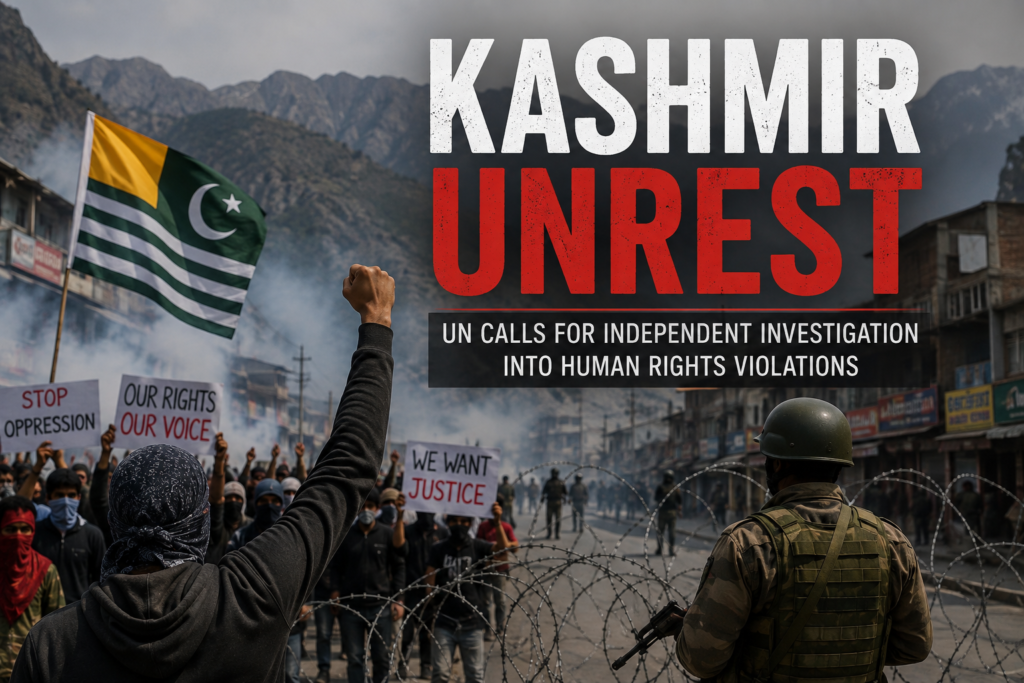
The recent unrest in Pakistan-administered Kashmir has intensified international concern after the United Nations called for an independent investigation into reports of deaths and alleged human rights violations during weeks of political demonstrations. The unrest, unfolding against the backdrop of regional elections, has reignited debate over governance, political representation, civil liberties, and the state’s response to public dissent.
The Office of the United Nations High Commissioner for Human Rights (OHCHR) has urged Pakistani authorities to ensure that all reported deaths and allegations of human rights abuses are investigated through prompt, impartial, and transparent inquiries. The UN has further called on all stakeholders to exercise restraint, protect civilians, and uphold internationally recognized rights, including freedom of peaceful assembly, freedom of expression, and the right to due process.
The demonstrations have largely been led by the Joint Awami Action Committee (JAAC), a coalition advocating political and electoral reforms. Protest leaders argue that the current allocation of legislative seats reserved for displaced persons from Indian-administered Kashmir has diminished the political voice of local residents. Beyond electoral concerns, demonstrators have also expressed frustration over governance, public accountability, and institutional transparency, reflecting broader political grievances that have accumulated over time.
Pakistani authorities, however, maintain that the constitutional framework governing the region remains legally valid and that security operations were undertaken solely to preserve public order. Officials have stated that several demonstrations escalated into violence, requiring intervention by law enforcement agencies to restore stability and protect public safety. The government has rejected allegations of systematic human rights violations, asserting that security personnel acted within the law while safeguarding the integrity of the electoral process.
As tensions deepened, reports emerged of violent confrontations between protesters and security forces. Human rights organizations and multiple media outlets documented casualties and injuries among both civilians and security personnel. However, the precise number of deaths and injuries remains contested, with differing accounts provided by officials, protest organizers, and independent observers. In light of these conflicting narratives, international organizations have emphasized that only an impartial and credible investigation can establish the circumstances surrounding the violence and determine whether any violations of domestic or international law occurred.
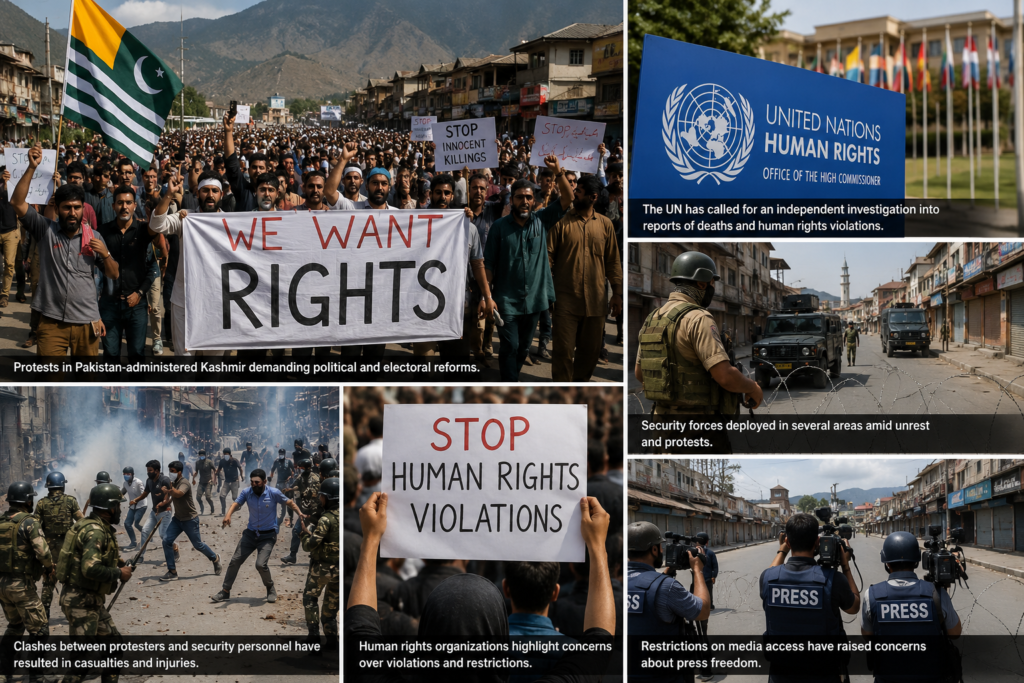
The unrest has also prompted renewed scrutiny of the broader human rights situation in the region. International organizations have raised concerns over allegations of excessive use of force, the detention of political activists, restrictions on peaceful assembly, temporary communication disruptions, and limitations affecting journalists reporting from the area. Rights advocates have stressed that governments bear a responsibility to maintain public order while ensuring that any restrictions on fundamental freedoms remain lawful, necessary, proportionate, and consistent with international human rights obligations.
Media freedom has emerged as another focal point of international concern. Press freedom organizations have warned that restrictions affecting journalists and foreign correspondents could limit independent reporting at a time when transparent public scrutiny is particularly important. Pakistani officials, meanwhile, have maintained that regulatory measures governing foreign media are intended to safeguard national security and ensure compliance with domestic law rather than restrict legitimate journalism.
Despite the unrest, the electoral process has proceeded in several constituencies across Pakistan-administered Kashmir under heightened security arrangements. Election authorities have reported voter participation in numerous districts despite the prevailing tensions. Nevertheless, some political groups and protest leaders have questioned aspects of the electoral framework and have called for institutional reforms aimed at strengthening transparency, democratic representation, and public confidence in the political process.
The United Nations has consistently emphasized that lasting stability cannot be achieved through security measures alone. Instead, it has encouraged all stakeholders to pursue constructive dialogue, respect the rule of law, and address political grievances through peaceful and democratic means. Human rights organizations have similarly underscored the importance of independent investigations into all reported deaths and allegations of abuse, arguing that accountability is essential not only for justice but also for preventing further escalation.
The developments in Pakistan-administered Kashmir underscore the complex relationship between security, governance, and the protection of fundamental rights. While competing narratives continue to shape public debate, there is broad international consensus that allegations of unlawful violence and human rights violations should be examined through credible, transparent, and independent investigations. As the political situation continues to evolve, the focus of the international community remains on ensuring accountability, safeguarding civil liberties, and supporting efforts toward a peaceful, lawful, and durable resolution of the region’s challenges.