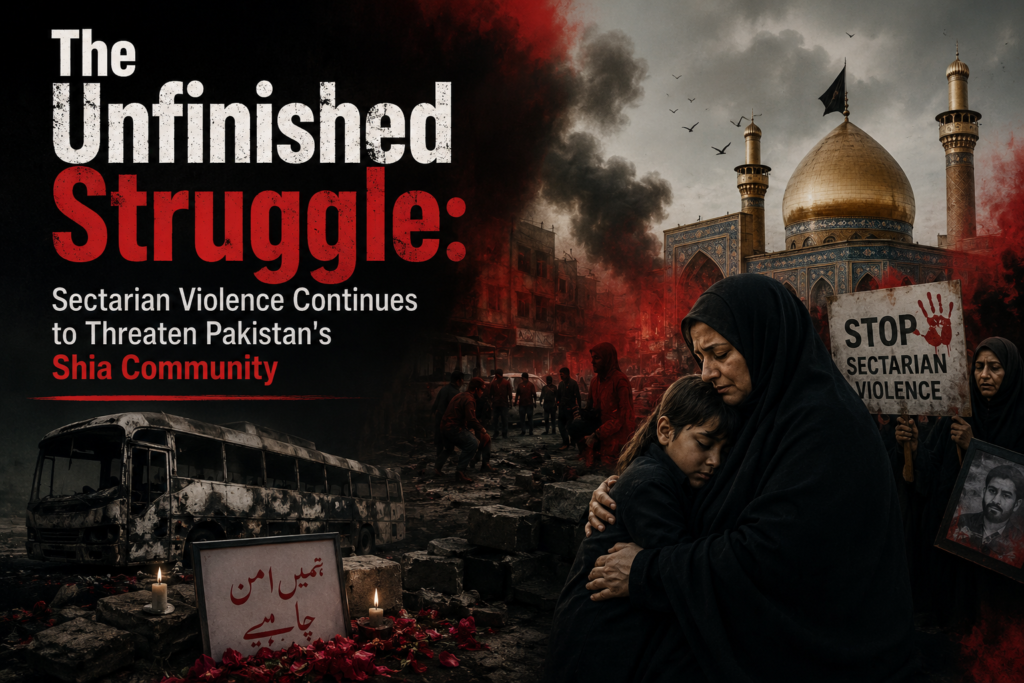
The Unfinished Struggle: Sectarian Violence Continues to Threaten Pakistan’s Shia Community
By Qundeel Hassan Senior Journalist & Human Rights Activist
Pakistan has paid a heavy price for decades of terrorism and sectarian violence. Despite significant counterterrorism operations and the sacrifices of security personnel, religious minorities—particularly the Shia Muslim community—continue to face deadly attacks, targeted killings, and an atmosphere of fear in several parts of the country. The suicide bombing at the Khadija Tul Kubra Shia Mosque in Islamabad in February 2026 served as a painful reminder that sectarian terrorism remains a serious challenge. Worshippers gathered for Friday prayers were targeted in an attack that killed dozens and injured many more. The attack shocked the nation because it occurred in the country’s capital, an area generally considered to have strong security measures. Public reporting indicates that the attack was claimed by the Islamic State’s Pakistan affiliate. This tragedy was not an isolated incident. For many years, Shia Muslims—including members of the Hazara community in Balochistan, residents of Kurram District, and worshippers attending religious gatherings—have experienced repeated attacks by sectarian militant groups. Human rights organizations and researchers have documented recurring violence against places of worship, religious processions, and civilians belonging to the Shia community. Every terrorist attack leaves behind grieving families, orphaned children, and communities struggling to rebuild their lives. Beyond the immediate loss of life, such violence undermines social harmony, damages public confidence, and threatens Pakistan’s constitutional commitment to protecting all citizens regardless of their faith. Pakistan’s law enforcement agencies have conducted numerous operations against militant organizations, and many terrorist networks have been disrupted over the years. However, recent incidents demonstrate that extremist violence has not been completely eliminated. Continued vigilance, effective intelligence-sharing, prosecution of those responsible, and protection of vulnerable communities remain essential to preventing future attacks. As a journalist and human rights activist, I believe that protecting religious freedom is not merely a legal obligation—it is a moral responsibility. Every Pakistani, regardless of sect or religion, deserves to worship without fear and to live with dignity and equal protection under the law. The fight against sectarian violence cannot be won through security measures alone. It also requires rejecting hate speech, promoting interfaith dialogue, strengthening the rule of law, and ensuring accountability for those who incite or carry out acts of violence. A peaceful and united Pakistan depends on safeguarding the rights and security of every citizen. Only when justice is applied equally and human life is valued without discrimination can Pakistan move toward lasting peace and national unity.